


10/29/2025
Andres
Re:defining humanity in the chaos of change
When our ancestors moved across the earth, change came in centuries. Stone gave way to bronze. Bronze to iron. Tools grew sharper, but time moved slowly. Now, progress arrives on a 24-hour news cycle. Great leaps in knowledge barely graze the surface of our collective attention. In this way, Artificial Intelligence has entered the world with speed and scale, reshaping how we live, work, and create.
But in this rush forward, a question lingers: Are we advancing with intention, or are we severing the thread between thought and practice?
-topaz-enhance-4x.webp&w=3840&q=75)
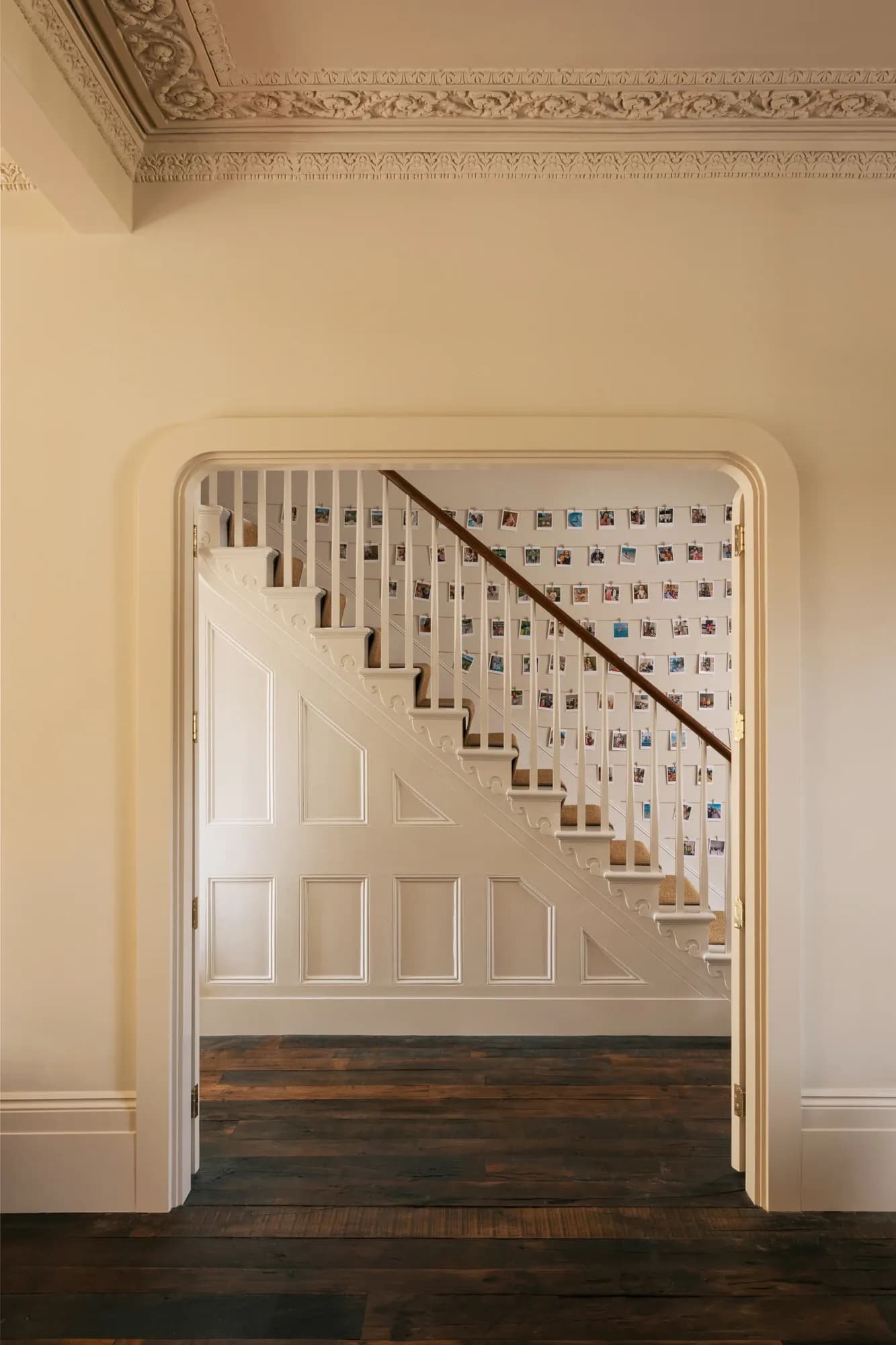
Calon Segur
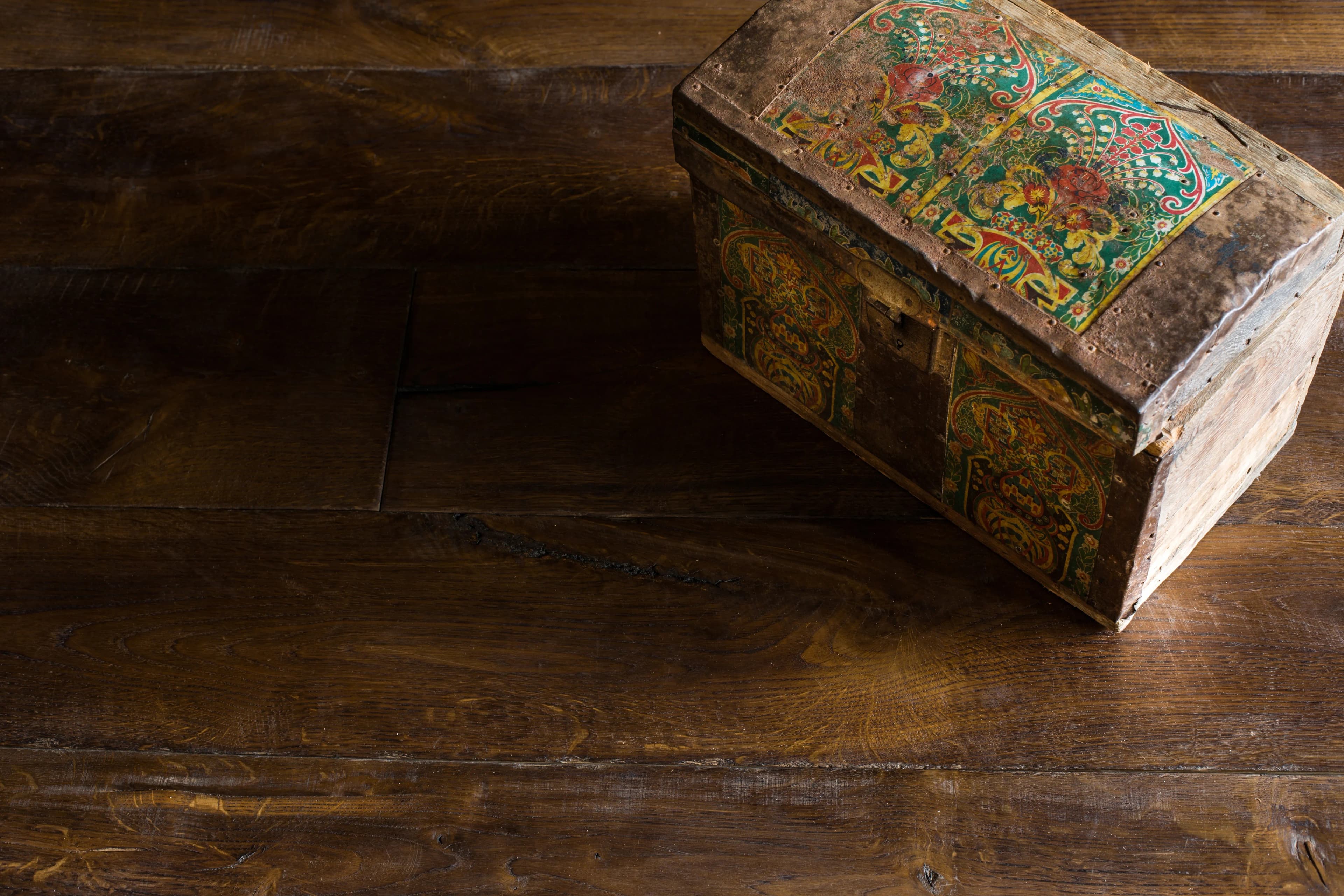
Hand Made French Oak
What is Artificial Intelligence (AI), really?
The definition of Artificial Intelligence (AI, from now on), is fraught with debate and developments, as the field is rapidly advancing and reaching its own limitations.
Paraphrasing a panel of European Commission experts, AI can be defined as a system designed by humans that, given a complex goal, can act in the physical or digital dimension by perceiving its environment, interpreting data, and deciding the best action to take to achieve said goal.
AI is used for a variety of purposes. In our current ecosystem, there are two main types, as IBM notes: predictive and generative AI.
Predictive AI is built to see patterns, tracing lines through past data to glimpse what may come next. By blending statistical analysis with machine learning, it forecasts outcomes, drawing its conclusions from what has already been. It does not imagine, but calculates — and in doing so, offers a map of likelihoods, not certainties.
Generative AI, by contrast, responds to prompts with creation. Trained on enormous volumes of raw data, it learns the hidden logic of what has come before, and reshapes audio, image, text, video or code into something that answers the prompt.
Shantanu Kumar
A new wave of potential… and a real threat to our way of life
AI, in its predictive and generative variants, has already transformed industries. AI can be better than doctors at diagnosing patients, and sales calls might be a thing of the past with completely automated outreach platforms like Artisan. Whether we like it or not, companies are embracing this new tech without any guardrails.
In a chilling piece for The Guardian, David Duvenaud, Associate Professor at University of Toronto, ponders on the eventual disempowerment of the human race when AI improves its capacity and replaces our role in society. What happens when the “human” becomes synonymous with costly, ineffective and too irrational?
We’re already seeing some of the dystopia come to life. The first field to feel the direct impact of AI has been the creative one, with artists, copywriters and voice actors being openly replaced with softwares like Midjourney or ChatGPT. Tech companies are also replacing entry level roles with AI. The future is here, and it might just require less of us around.
While this might feel haunting, AI is not close to replacing human will or intelligence. For now, we know it has very clear limitations, like its propensity towards hallucinations or its inability to create its own goals.
Thanks to people’s resistance and the allure of reality, we are still bound to the physical. And not all industries are folding to AI’s wind. Luxury may be experimenting with change, but not without question.

Luxury and AI: Two industries at odds?
Luxury is rooted in the human touch — in the artistry and craftsmanship of an object, a space, an experience. It offers immense value, so much so that clients will travel miles, save for years, and sit patiently on waiting lists just to acquire one of its identity markers. Luxury sells friction — through scarcity, ritual and restraint — so that the final acquisition feels not just desirable, but earned. What’s being bought isn’t simply a product, but a sense of meaning.
AI, meanwhile, is all about immediate access. It offers easy answers and ego-boosting responses. It doesn’t ask for patience, only prompts. It’s fast, frictionless, and available to anyone. It’s the simplest option — and often, the cheapest.
And yet, these two worlds are drawing closer. Luxury brands are beginning to weave AI into their processes, from product development to personalisation. AI is being heralded as a tool for creating truly bespoke experiences at scale. But not every brand is moving at the same pace. And not all are convinced the future should be so easily automated.
Oh, how the story unravels within the numbers
According to Bain & Company, large luxury Maisons are experimenting with nearly six AI use cases on average. Operational efficiency leads the charge: forecasting demand, allocating stock, streamlining logistics.
On the other hand, the more accessible and less costly Generative AI is not being embraced by the industry. Fewer than 5% of Maisons have ventured into AI-assisted creativity. The reason? The fear of eroding the mystique, the savoir-faire, the soul. And they’re not the only ones thinking about the loss of human creativity…
Luxury experts and AI: In conversation
Daniel Langer, one of the world's foremost authorities on luxury brand strategy and high-net-worth behaviour, warns of AI’s tendency to strip away the emotional nuance that defines true luxury. When experiences become too automated, too data-driven, they begin to feel less like rituals and more like transactions. And when that happens, something vital and intimate is lost.
Stéphane JG Girod, Professor of Strategy and Organizational Innovation at IMD, goes further. He reminds us that AI carries hidden costs: not just environmental and legal, but cultural. Algorithms do not judge as we do. They do not question, rebel, or hesitate. They do not dream. And in replicating what already exists, they risk flattening culture into sameness.
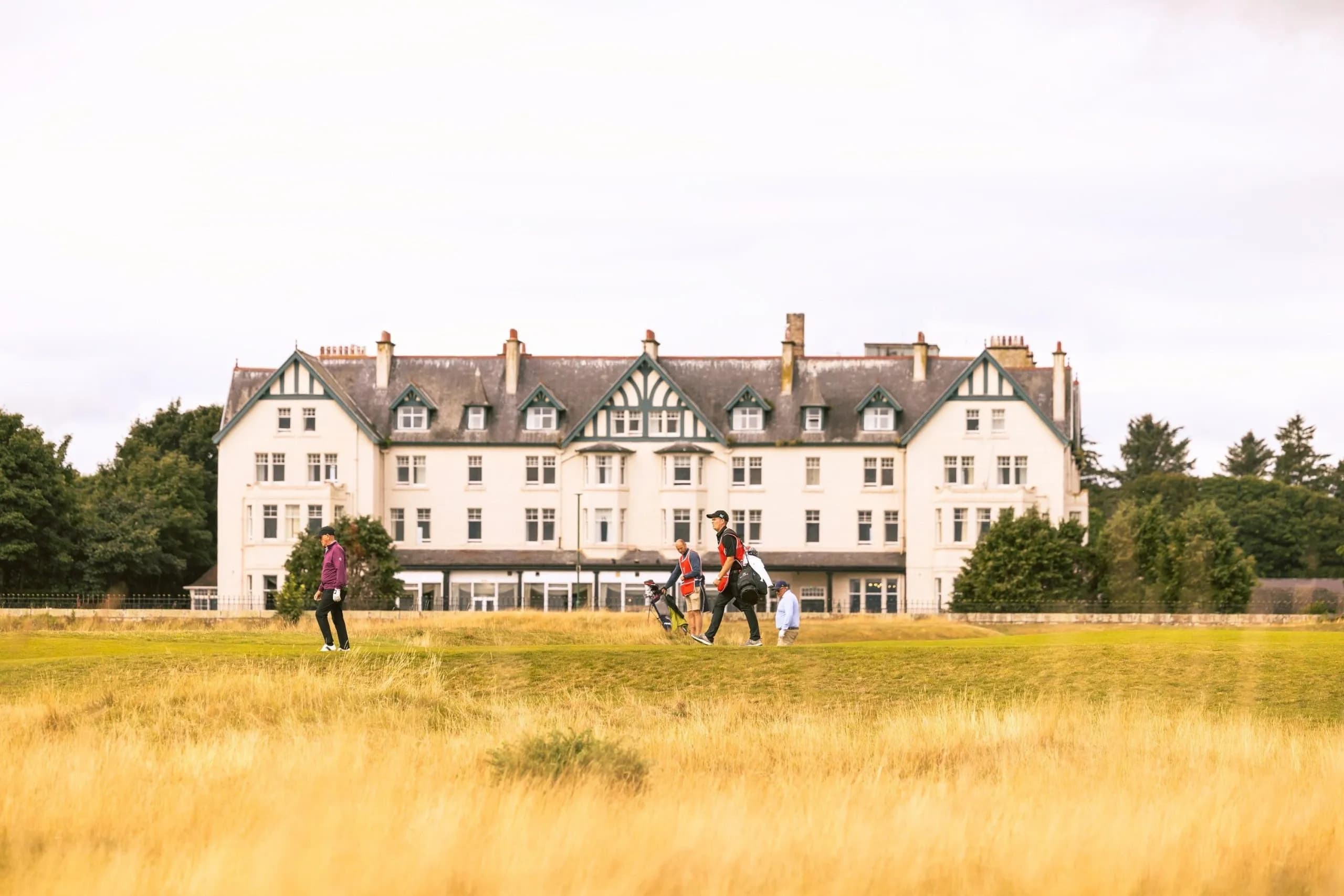
Calon Segur
Our stance: Humanity’s genius cannot be replaced
Luxury has always been shaped by scarcity. What is rare becomes sacred. And in a world where sameness and flawlessness threaten to flatten the edges of our existence, humanity — with all its texture, contradiction and depth — may well become the ultimate luxury of our time.
That’s why our craft hinges on the art of transformation; turning reclaimed and antique wood into enduring works of beauty. These materials do not come to us unharmed or unworn; they bare the marks of time and use. They are profoundly human in their imperfection, and our role is to forge new life within the already lived. Antique wood shows us the power of restoration, and or admiring the different and storied.
Our imagination is tethered to our lands
The human genius is irreplaceable because it is filtered through millions of emotional filters that distort and exalt the factual. Our childhoods and languages shape the rugged landscape of our brains, creating neural connections that can’t be emulated by written code. We do not have the best memories, or the fastest processing chips, but we have a unique fingerprint of memory and cultural understanding. And through it, we transform our experiences into new ideas.
Modern science grounds this to the complex architecture of our brains.
Ancient wisdom connects this to one consciousness, one transcendent journey.
Ultimately, our individual, irreplicable context makes us different to the systems we code, and the intelligences we create. We are touched by the world.
Boldness is a human trait
AI is brilliant at following, at streamlining, at sharpening what already exists. But it is bound by the past. This means its brilliance is limited. A cage with no key.
Humans, on the other hand, thrive in uncertainty. Faced with adversity, we’ve invented tools: from fire to stories, from shovels to rockets. We’ve learned to tend to each other and to the land. Our longing to leave a mark — to matter — has taken us beyond survival, beyond even the written record.
We’ve shaped cathedrals from stone and crossed oceans in search of meaning. We’ve broken moulds not because we had to, but because we could. That is something irreplaceable.
Can our world weather deeper strains?
Generative AI is not immaterial. Its apparent lightness hides a weighty footprint. Behind every generated image, code snippet or poetic line lies a vast network of servers, cooled with water, powered by fossil energy, and maintained by systems that hunger for scale.
In 2023 alone, the training of a single large model increased a company’s water consumption by over a third. By 2027, AI’s thirst may account for half of the UK’s total water usage. And this is just one part of the cost — greenhouse gas emissions, rare earth extraction and electronic waste follow close behind.
In an ongoing climate crisis, this new weight might prove to be unbearable. Technology may march forward, but the environmental impact cannot be overlooked.
Conclusion
AI holds promise — especially in its ability to learn, identify patterns, and bring clarity to mass complexity. But in everything we build, how we do it matters as much as what we do.
The concern isn’t whether AI should exist — because it already does — but how it should exist. So what if, instead of pushing further into human territory — replacing creativity, emotion, or judgment — we focused our energy on refining its foundations? On improving chip efficiency, reducing emissions, and lowering water consumption? On using it to make people’s lives better, instead of removing the human touch from our work?
Progress doesn’t have to come at our expense.
Innovation should be in service of life, not in conflict with it.
In this new age, we invite you to embrace what is often overlooked: the quiet luxury of difference, the inevitability of change, the beauty of things that carry their age with grace. There is wisdom in the weathered, comfort in the imperfect, and dignity in what doesn’t try to please everyone.
Embrace imperfection. Lean into the genius of the unique. Be human.
Re:sources
If you’d like to dive deeper into this topic, you can explore the following resources:
The European Commission on AI
Blake Montgomery for The Guardian on AI’s effect on the financial and corporate world
Charis McGowan for The Guardian on AI’s effect on the creative job market
Prof Dr Matteo Valleriani for The Guardian on AI and the humanities
Bain Company on the luxury sector and AI adoption
Elle Decor on interior design and AI
Daniel Langer for Luxury Daily on AI and luxury
Stéphane JG Girod for Forbes on AI and luxury
David Duvenaud for The Guardian on societal change and AI
About us:
We’re Re:claimed — formerly Reclaimed Flooring Company. Since 2006, we’ve challenged conventions in design and material culture, proving that luxury doesn’t need to be new to be exquisite. We reclaim wood with history and transform it into statement pieces that speak of time, craft, and intention. In an age of speed and sameness, we choose slowness, intention, and difference. As Re:claimed, we’re carving a new path: one where bold ideas, ethical beauty, and radical care shape the spaces we live in.


This is a rich test block test
.jpg&w=2048&q=75)